Expert perspectives on LCA, eco-design, compliance, and environmental intelligence.
The EU's Joint Research Centre has updated the PEF method's characterisation factors from EF3.0 to EF3.1, reflecting the latest advances in LCA science. Here's what changed and what it means for your environmental footprint calculations.
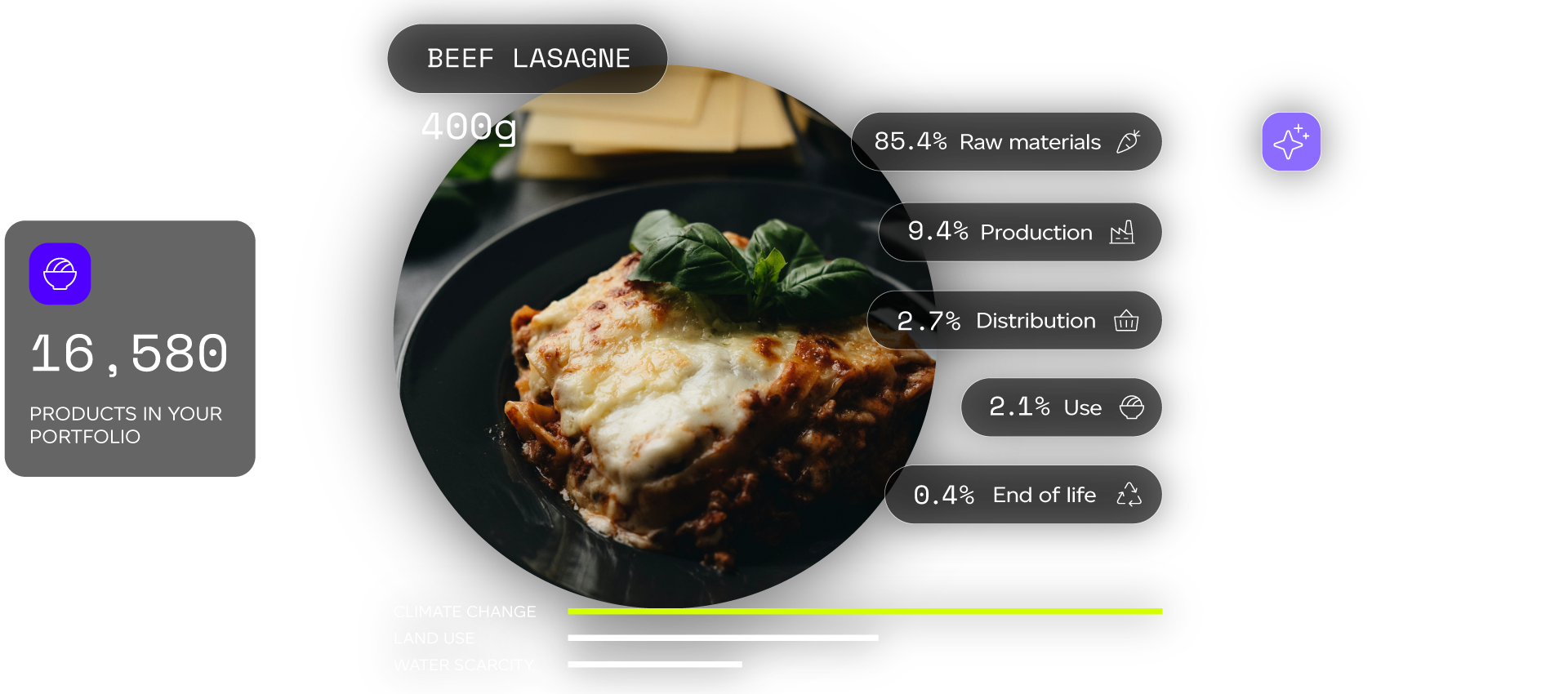
A manual LCA for a lasagne with 35+ components can take four to six weeks per product. Automation addresses the data granularity, methodological consistency, and scalability challenges that make manual assessment impractical at portfolio scale.
Tazaki Foods footprinted over 1,000 SKUs and uncovered reformulation opportunities by sharing product-level emissions data directly with their suppliers.
Building on Part 1's framework introduction, this article demonstrates how to interpret your LCA results using planetary boundaries — connecting product-level impacts to Earth-system thresholds.
The PEF method evaluates products across 16 environmental categories, while the Planetary Boundaries framework defines nine Earth-system thresholds. Understanding how they relate is essential for interpreting LCA results in a broader ecological context.
The EAT-Lancet Commission's October 2025 report on feeding 10 billion people by 2050 has major implications for food product strategy. Plant-forward diets, ultra-processing scrutiny, and waste reduction are reshaping the competitive landscape.
The traditional trade-off between detailed manual LCAs and quick automated screening assessments is dissolving. Modern technology delivers both speed and rigour without compromise.
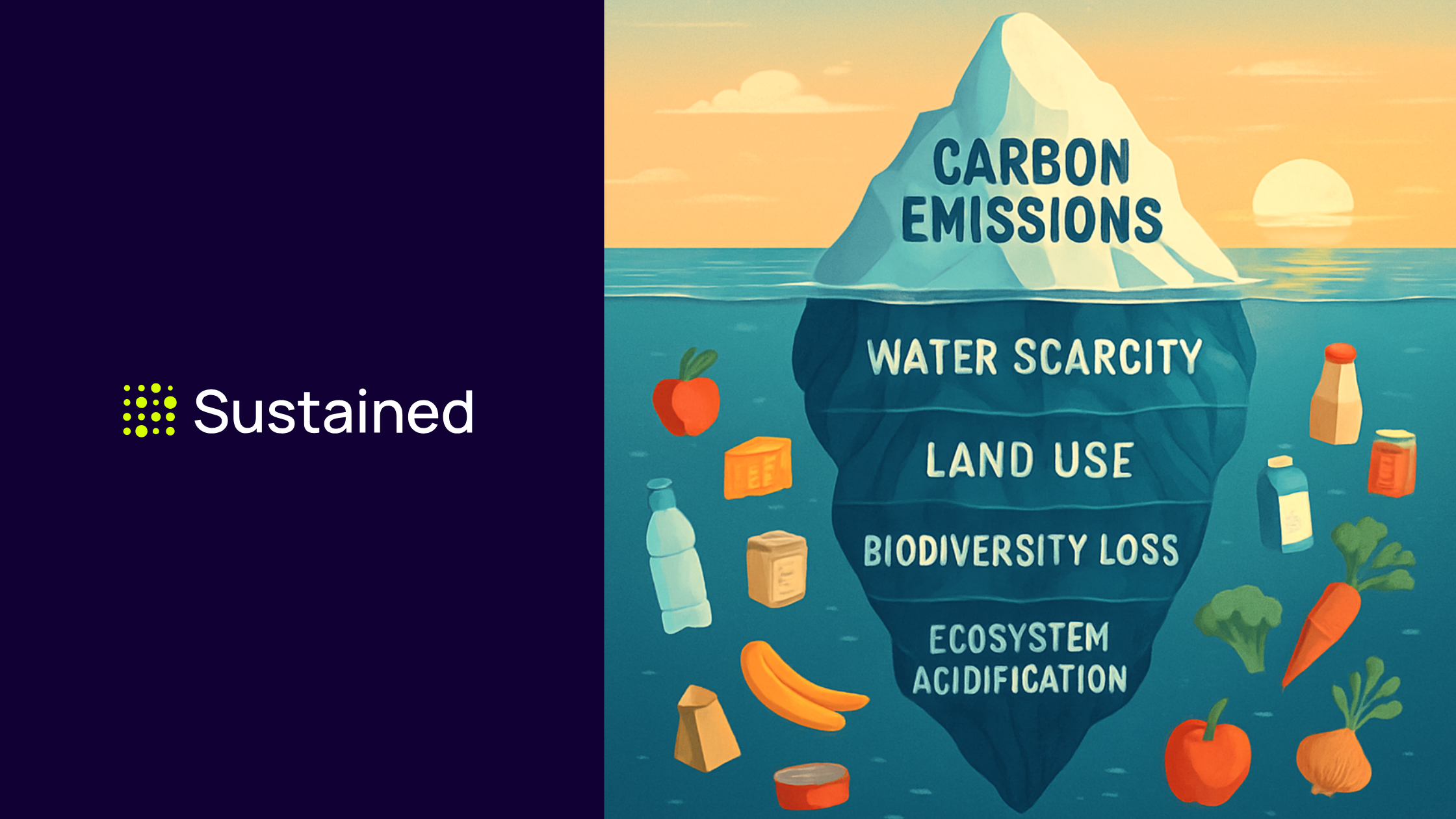
Most companies prioritise carbon when reformulating products, but the largest environmental opportunities often exist in unmeasured impact categories. A multi-impact approach to reformulation reveals wins that single-metric strategies miss entirely.
Packaging offers a significant and often untapped opportunity to reduce environmental impact without changing the product itself. Both packaging manufacturers and brands can leverage data to make better material and design choices.
Many food and beverage companies recognise the importance of measuring environmental impact but fail to grasp how their own contributions to environmental degradation create tangible business risks.
In 2025, the bigger question is not just what your footprint is, but where you are exposed. Impact data provides the foundation for identifying supply chain risks before they materialise as financial losses.
The biggest challenge in LCA is access to primary data. No company can audit its entire supply chain, so finding the right balance between primary and secondary data is both a practical necessity and a methodological requirement.
B Corp certification received its seventh major update in April 2025, shifting from a points-based system to mandatory minimum requirements. The new standards significantly expand environmental and supply chain expectations.
In a market crowded with sustainability claims, verifiable LCA data provides the foundation for credible product differentiation that withstands scrutiny from retailers, regulators, and consumers.
Integrating sustainability into procurement can cut costs by up to 16%, according to Rabobank. The key is using targeted environmental data to identify efficiency gains that deliver both financial and environmental returns.