Beyond Carbon Tunnel Vision
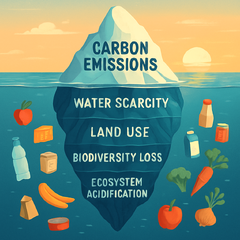
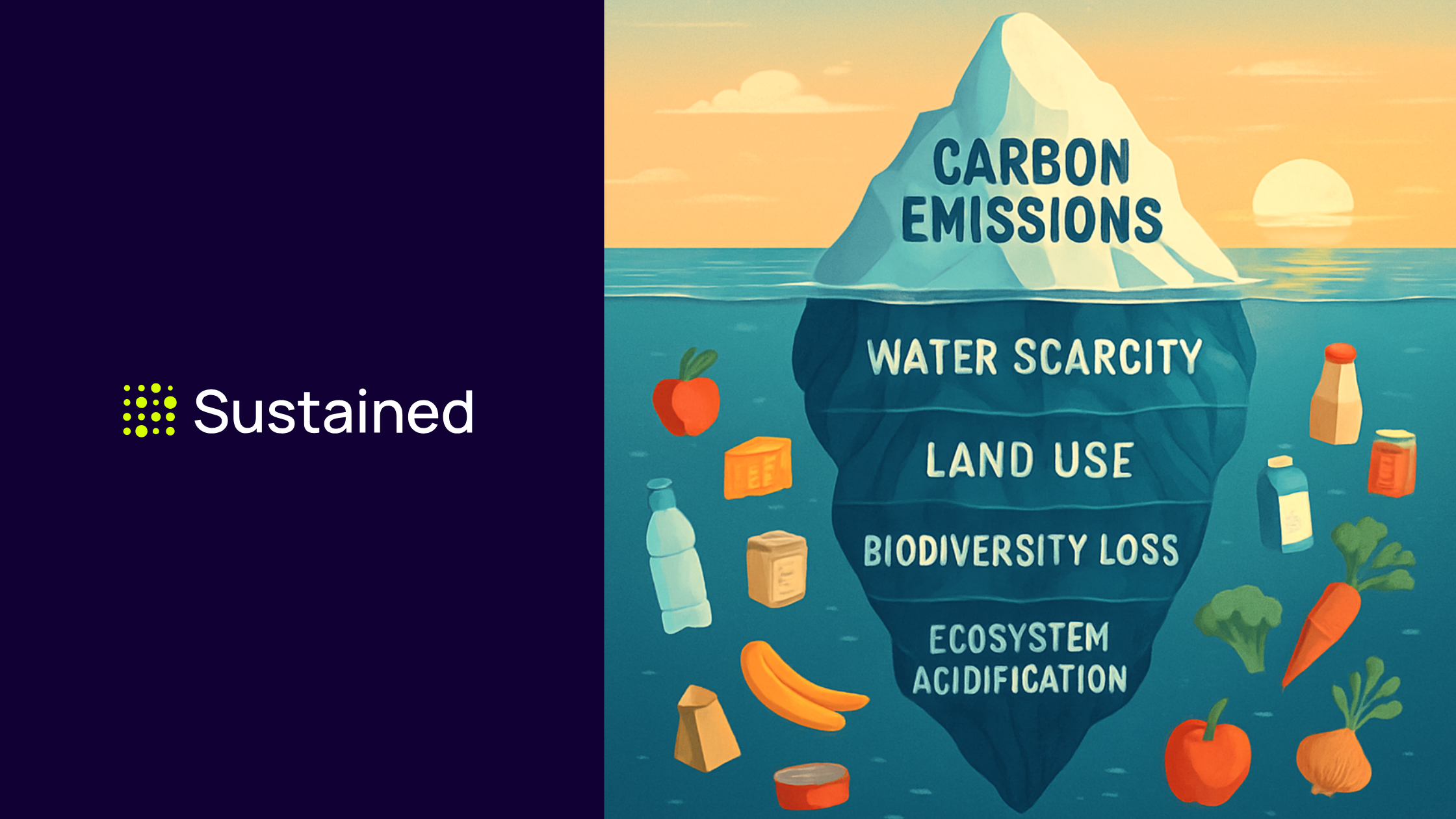
When food and beverage companies think about reformulation for sustainability, carbon is almost always the starting point — and often the ending point. But Life Cycle Assessment across all 16 PEF impact categories consistently reveals that the largest environmental improvement opportunities frequently lie in categories that companies are not even measuring: eutrophication, land use, water scarcity, or ecotoxicity.
Focusing exclusively on carbon can lead to reformulations that reduce greenhouse gas emissions while inadvertently increasing impacts elsewhere — a phenomenon sometimes called "burden shifting."
Four Strategic Reformulation Opportunities
1. Multi-Impact Ingredient Swaps
Replacing a single ingredient can shift performance across multiple impact categories simultaneously. For example, substituting a high-impact dairy ingredient with a plant-based alternative may reduce not only carbon emissions but also land use, water consumption, and eutrophication potential. The key is assessing swaps across all relevant categories to ensure net improvement.
2. Shelf-Life Extension
Extending a product's shelf life by even a few days can dramatically reduce food waste across the supply chain and at the consumer level. The environmental benefit of waste avoidance often outweighs the marginal impact of a preservative or packaging change — but you need multi-impact data to confirm this.
3. Packaging-Product Integration
Reformulation and packaging redesign are traditionally separate workstreams, but they are deeply interconnected. A reformulation that changes a product's viscosity, moisture content, or pH may enable different packaging materials or formats that carry their own environmental benefits.
4. Process-Driven Reformulation
Sometimes the biggest wins come not from changing what is in the product but from changing how it is made. Adjusting cooking temperatures, blending sequences, or drying methods can reduce energy consumption and emissions while maintaining product quality.
The Multiplier Effect
When these four strategies are pursued together, informed by comprehensive multi-impact data, the results multiply. A reformulation that combines an ingredient swap with a shelf-life extension and a process optimisation can deliver environmental improvements far greater than the sum of its parts.
The Business Case for Comprehensive Environmental Design
Smart reformulation is not just an environmental strategy — it is a business strategy. Reducing resource-intensive ingredients lowers procurement costs. Extending shelf life reduces waste-related losses. Optimising processes cuts energy bills. And having the data to prove genuine environmental improvement builds credibility with retailers and consumers who are increasingly sceptical of vague sustainability claims.
The companies that treat reformulation as a multi-impact design challenge — rather than a single-metric compliance exercise — will find both the largest environmental wins and the strongest commercial returns.