A Significant Shift
B Corp certification received its seventh major update in April 2025, representing the most significant structural change in the certification's history. For companies currently certified or considering certification, understanding these changes is essential for planning and preparation.
Two-Stage Structure
The new standards introduce a two-stage structure:
- Foundational Requirements: Mandatory minimums that every certified B Corp must meet. These are non-negotiable and cover governance, transparency, and baseline environmental and social performance.
- Impact Topic Requirements: Deeper requirements across specific impact areas where companies must demonstrate meaningful performance and continuous improvement.
From Points to Minimums
The most fundamental change is the shift from a points-based system to mandatory minimum requirements. Under the previous framework, companies could accumulate points across various categories, potentially compensating for weak performance in one area with strong performance in another. The new structure eliminates this flexibility — every company must meet the minimum threshold in every foundational area.
This change raises the bar significantly and ensures that B Corp certification represents a consistent baseline of performance across all dimensions.
Expanded Environmental Requirements
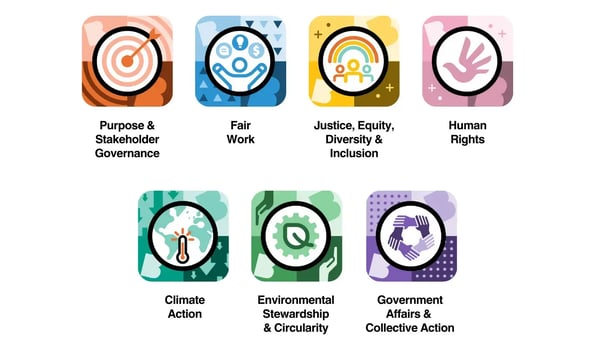
The environmental requirements have been substantially expanded, with two primary focus areas:
Climate Action
Companies must demonstrate credible climate commitments backed by measurement and action, not just aspirations. This includes:
- Greenhouse gas measurement across relevant scopes
- Reduction targets aligned with science-based pathways
- Progress tracking with verifiable data
Environmental Stewardship
Beyond climate, the new standards address broader environmental performance:
- Resource efficiency in operations
- Waste reduction and circular economy practices
- Biodiversity and ecosystem impact considerations
Size-Specific Requirements
The new standards introduce size-specific requirements that scale expectations with company size and capacity. Larger companies face more demanding requirements, reflecting their greater impact and greater resources for measurement and management.
New Focus on Supply Chains
Perhaps the most significant expansion is the new focus on supply chain responsibility. Companies are now expected to demonstrate understanding of and engagement with environmental and social impacts across their supply chains, not just within their own operations.
For food and beverage companies, this means having credible data on the environmental impacts of sourced ingredients and materials — making product-level LCA not just a sustainability tool but a certification requirement.